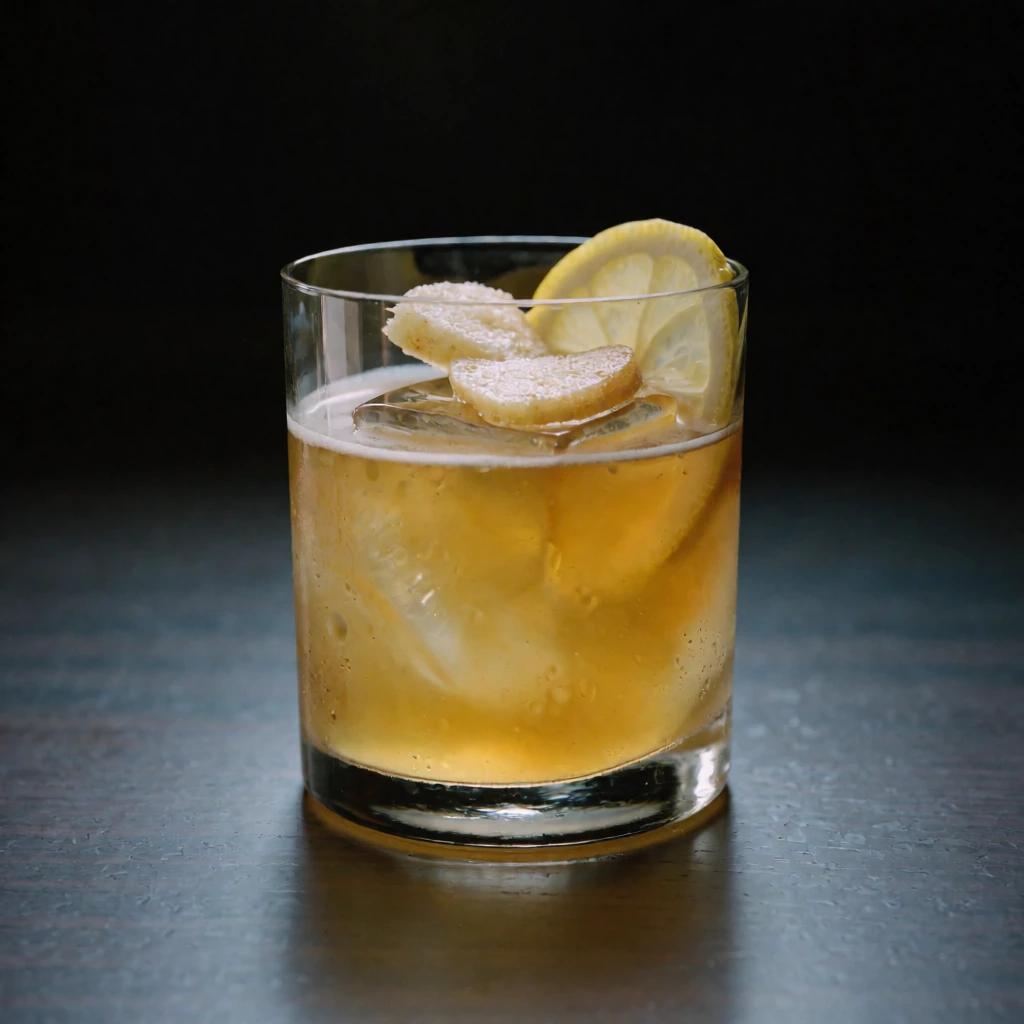
Few cocktails arrive fully formed, but the Penicillin did — which is partly why the industry spent so long being suspicious of it. Sam Ross, a young Australian bartender working the quietly revolutionary room at Milk & Honey on Manhattan's Lower East Side, built it sometime around 2005 from components that had no obvious business being together: blended Scotch as the workhorse base, a careful architecture of honey and fresh ginger and lemon riding above it, and then — the provocation — a measured pour of heavily peated Islay single malt floated across the top. It was a drink with a thesis.
The thesis was this: smoke and sweetness are not opposites. They are, in the right proportions, the same argument made from two directions. Ross understood that Scotch whisky had been imprisoned for decades inside a particular idea of itself — serious, brown-spirit, probably your father's, definitely not refreshing — and that the way out was not to dilute the category but to find what it was already doing and push harder on it. Lemon and honey are traditional companions to Scotch in blended drinks going back centuries; ginger had long made the crossing from medicine chest to bar cart. What the Penicillin added was confrontation: that Islay float sitting on top like a weather system, delivering smoke and peat to the nose before the first sip ever reaches the tongue.
The float is not decoration. This point deserves emphasis because the Instagram years have been hard on the concept of technique actually mattering. The Islay pour — heavy malt like Laphroaig or Lagavulin, tipped slowly over the back of a spoon onto the surface of the finished drink — creates an aromatic experience that the palate is already primed for by the time lips touch glass. The drinker encounters the drink twice: once in the air, once in the mouth. The smoke arrives first, then retreats into the honey and ginger warmth that follows. It is a structure, not a flourish.
Milk & Honey was, by deliberate design, not a famous bar. Sasha Petraske had opened it in 1999 with no sign, a phone reservation system, and a set of house rules about conduct that were sometimes mistaken for affectation but were in fact the operating conditions for doing serious work in a small room. Drinks created there passed not through press releases but through bartenders who left to open their own places — Death & Co, Attaboy, Little Branch, PDT — and carried the recipes in their heads. The Penicillin spread the way useful ideas spread: by being useful. It was the right drink at the right moment in a city reconsidering what a Scotch cocktail could be.
By the time it appeared in print — in the 2012 book Bartender's Choice and later in countless bar programs globally — the Penicillin had already been absorbed into the working vocabulary of serious cocktail bars from Melbourne to Oslo. Its longevity says something specific: drinks that survive the decade after their invention tend to be structurally sound enough to absorb variation without dissolving. Change the blended Scotch, shift the honey-ginger ratio slightly toward ginger, choose a different Islay expression — the drink bends without breaking. That's architecture, not accident.
Tonight, in that old fashioned glass with its single large clear cube, the Penicillin sits with the amber warmth of the base catching light through the darker float above it. It looks like it has always existed. That is the highest compliment the drinks world can pay a cocktail that is, in historical terms, barely old enough to have opinions about where it went to school.